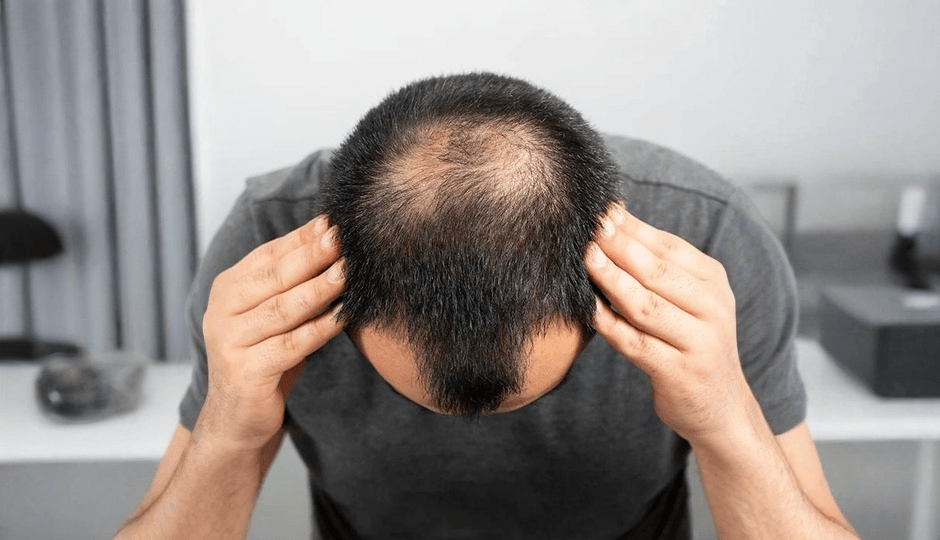

Before discussing the different types of hair loss in men, it’s important to understand the normal hair growth cycle, which consists of three main phases:
- Anagen Phase - Active growth of hair for many years
- Catagen Phase - Hair growth stops, and the strand separates from the follicle
- Telogen Phase - The follicle rests for 2–3 months before the hair falls out
Once a hair strand falls out, the follicle typically starts growing new hair during the anagen phase of the hair growth cycle. It is common to shed 50-100 hairs daily during this cycle.
However, when the hair growth cycle becomes disrupted, hair follicles can weaken or become damaged. This may cause hair shedding to outpace new hair growth, leading to noticeable hair loss over time.
Common signs can include thinning hair, a receding hairline, or patchy areas of hair loss. Although hair naturally sheds across the body, hair loss is often most noticeable on the scalp.
Hair loss can develop for many reasons, including genetics, aging, hormonal changes, medical treatments, unhealthy lifestyle habits, and damaging hair care or styling practices.
All Types of Hair Loss in Men
The common types of hair loss prevalent in men, from a young age through adulthood:
Androgenetic Alopecia
Androgenetic Alopecia, also known as male pattern baldness, is one of the most common types of hair loss patterns in men and women. It occurs due to hereditary factors and the shrinkage of hair follicles caused by the hormone dihydrotestosterone (DHT).
About 30-50% of men experience Androgenetic Alopecia by age 50, and it begins in their teenage years. It can progress gradually, sometimes leading to significant hair loss. Women also commonly experience it, but it shows as hair thinning rather than a receding hairline.
Alopecia Areata
This is a type of hair loss in men that develops from an autoimmune condition in which the body’s immune system attacks hair follicles. It leads to the sudden appearance of bald patches on the scalp.
Both children and adults experience this type of hair loss without any warning. However, if treatment is started early, hair regrowth is possible.
But if you ignore it, it may lead to complete hair loss, not just on the scalp but also in other areas, such as the eyebrows and eyelashes.
Telogen Effluvium
Telogen Effluvium is a temporary form of hair loss that occurs after medical conditions, surgery, nutritional deficiency, and childbirth. It happens when hair follicles enter the Telogen phase, which is when they stop producing new hair.
It usually appears a few months after a medical event and is characterized by shedding 300-500 hairs every day. However, hair growth begins within 6 months of stopping the medication or of recovery. If hair doesn’t grow back as expected, consult a hair specialist for a suitable hair treatment for your scalp.
Anagen Effluvium
Anagen Effluvium occurs after complex medical treatments, including chemotherapy. During this, the hair follicles temporarily stop producing hair, leading to severe hair loss throughout the body.
Usually, hair grows back naturally after some time. Still, it is advisable to consult a hair loss specialist to obtain medication to regrow lost hair.
Tinea Capitis
Unlike male pattern baldness, Tinea Capitis is a contagious fungal infection of the scalp that can lead to hair loss. Often referred to as scalp ringworm, this condition affects the scalp and hair shafts, causing itchy, inflamed patches that may become red, scaly, or sore over time.
As the infection spreads, small bald spots can develop and gradually enlarge. In some cases, the affected areas may also become tender, swollen, or filled with pus-like sores.
Because Tinea Capitis is caused by a fungal infection, proper antifungal treatment is necessary to stop the spread and support healthy hair regrowth. Seeking care from a qualified hair loss specialist can help ensure an accurate diagnosis and effective treatment plan.
Conclusion
If you notice symptoms of any of the common types of hair loss listed above, it’s important to seek treatment early. Early detection and action are key to preventing severe hair damage later.
If you’re in Chicago, IL, and the surrounding areas seeking personalized hair loss treatments for men, explore non-invasive options and treatments with Christine Pusateri Hair Solutions to restore your hair. Get a free confidential consultation today.
FAQs
- How do you know what type of hair loss you have for men?
To identify different types of hair loss in men, you can track hair loss patterns and texture. If you notice a receding hairline and thinning of the crown, it is male pattern baldness. Similarly, you can assess scalp health and perform a pull test to identify other hair loss patterns, such as alopecia areata, telogen effluvium, or traction alopecia.
- Which organ is linked to hair loss?
The thyroid gland can play a role in hair loss. However, factors like hormones, genetics, and overall health also contribute.
- What vitamin am I lacking if my hair is falling out?
Lacking vitamins, such as Vitamin D, C, E, Biotin (B7), and Iron, can cause hair loss. They are important for strengthening hair follicles, promoting scalp health, and regenerating hair.
- What kind of illness makes your hair fall out?
Hair fall may occur due to underlying health issues such as autoimmune diseases, nutritional deficiencies, thyroid disorders, or severe infections.